
Infosys has been focusing on winning more lucrative digital technology and automation outsourcing contracts.

Software services industry may have to relook its cost structure to maintain a higher margin.
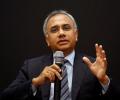
Infosys CEO Salil Parekh has got a massive 88 per cent jump in annual remuneration to Rs 79.75 crore, making him one of the highest-paid executives in the country. The software services firm has sought shareholders' approval for the reappointment of Parekh as chief executive officer and managing director for a second five-year term beginning July 1. According to the company's annual report released on Thursday, Parekh, 58, took home a salary of Rs 71.02 crore in the fiscal year ended March 31, 2022.

The initiative, whose founding partners also include Accenture, CA Technologies, Cisco, Cognizant, Hewlett Packard Enterprise, Pegasystems, PwC, Salesforce and SAP, aims to bring competitive training content together on one platform to serve the greater good.

Sixteen major contracts worth nearly $14 billion to be renewed by June 2018 but uncertainty looms large.

Indian IT companies have been under pressure to return excess cash on their books to shareholders through generous dividends and buybacks

5,565 contracts, valued at $201 billion are up for rebids across geographies and verticals by 2018.

The proposed annual quota for Indian companies could be between 10 and 15 per cent. Currently, there are no country-specific limits on H-1B allotment.

Colleges are witnessing more offers, with better salary packages. Median salary packages offered have improved over last year.

It's the second time Nasscom has projected single-digit growth in a decade.

Infosys, in April, had said that it will pay up to Rs 13,000 crore to shareholders during the current financial year through dividend and/or share buyback.

The board expansion comes against the backdrop of an ongoing tussle between the founders and the management over contentious issues such as CEO salary hike, severance package to former employees and corporate governance standards.

Analysts are of the opinion that 55 may emerge as the new age to retire for techies in India

Takes a knock after RBS changes plan on Williams & Glyn; contract loss to impact 3,000 Infy staffers

From acquiring creative agencies, to setting up onsite innovation centres and turning around BFSI with entirely new digital offerings, 2018 had seen the IT industry going from initial lows to new highs.

The local markets are expected to react to global triggers until the government announces the Union Budget.

Mid-sized IT firms have stepped up hiring in the current fiscal year, adding more than half as many employees in the first quarter of FY19 as compared to the whole of the previous financial year. This momentum is likely to continue for the rest of 2018-19 (FY19) as well.

"There was not a single decision that I took during my second tenure without discussing it with Ranga and getting valuable input from him," says Narayana Murthy.

Elliott Capital's letter to Cognizant, detailing how the latter can reinvent itself, has many lessons for its India-listed peers like TCS and Infosys, says Akash Prakash.
Most of the large mid-caps share similar business model as the large-caps and have more of less similar set of clients.

Considering the June quarter numbers have been softer, as compared to the past quarters, and the overall macro environment is yet again under a cloud, Indian IT services should seriously look at the new normal

Stock crashes 6.5%; top 5 firms lose Rs 33,883 crore in market cap

While TCS, Infosys and Cognizant have hinted at a weak quarter, analysts say the slowdown is cyclical and growth will return after the US elections

Pravin Rao says firms with revenue of $600-700 millon will be preferred.
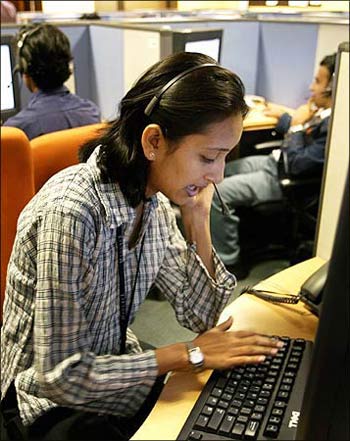
There has also been a shift from hiring freshers to those with two to five years' experience.
At a time of massive job losses that is what the much-vaunted Indian IT sector needs. Ritwik Sharma reports.

After taking over scam-hit Satyam, Techn Mahindra has made many structural changes in the latter to turn it around.
With Infosys reportedly increasing the pay packages of senior executives, including executive vice-presidents and a few vice-presidents, threefold, the Indian information technology (IT) services space might well get a new benchmark.

Reskilling and online certification are the biggest earners in the Indian online education market

'Over the next two to three years, hiring will come down further.' 'You will see the industry intake of freshers go down to 150,000 from the current 200,000.'

Infosys, Wipro may follow suit as investors eye a piece of the large cash kitty as growth slows.

Amid Trump's expected action against employment visas, India's bellwether IT firms reveal they have been preparing for this eventuality for years.
While Indian IT has known what is coming and has a strategy ready to combat it, the same can't be said about the country and the government.

The past few weeks have seen several hundred people let go of by IT services firms joining unions claiming to represent tech workers fighting for their rights.

The companies experienced a drop of 5,436 approved petitions (37 per cent) in 2016 as compared to previous year, a report by the National Foundation for American Policy, a Washington-based non-profit think-tank, said.

Did you know that India is among the top five countries in food processing?

'They feel if they join a union, it will have a negative impact on their appraisals.'

'The biggest struggles are in the human mind.'

But Indian information technology workers might do better without the companies that held them back, says Mihir S Sharma.

Google is the most attracitve employer in India followed by Sony
 © 2026 Rediff.com - Advertise with us - Disclaimer - Privacy Policy - Sitemap - Feedback - About us - Terms of use - Grievances